The Gap Between FSSAI Rules and What Reaches Our Plate
Imagine sitting down at a five-star hotel, ordering a beautifully plated dessert, and assuming that everything behind the kitchen door meets the highest standards of food safety.
Now imagine food safety inspectors entering that same kitchen and finding expired food, pest activity, poor storage and hygiene issues.
This isn’t a hypothetical situation.
In August 2026, FSSAI issued notices to Andaz Delhi and JW Marriott in Aerocity following inspections that reported several food safety, hygiene, storage and licensing deficiencies. At Andaz Delhi, inspectors reportedly found around 87 kg of expired sweets, along with expired cake bases and bread. Other observations included pest activity, inadequate temperature monitoring, poor waste management, allergen-segregation issues and gaps in supplier verification. Food samples were also collected for analysis.
If such findings can emerge from premium establishments, an uncomfortable question follows:
How safe is the food we eat when nobody is watching?
India Has the Rules. But Are They Being Followed?
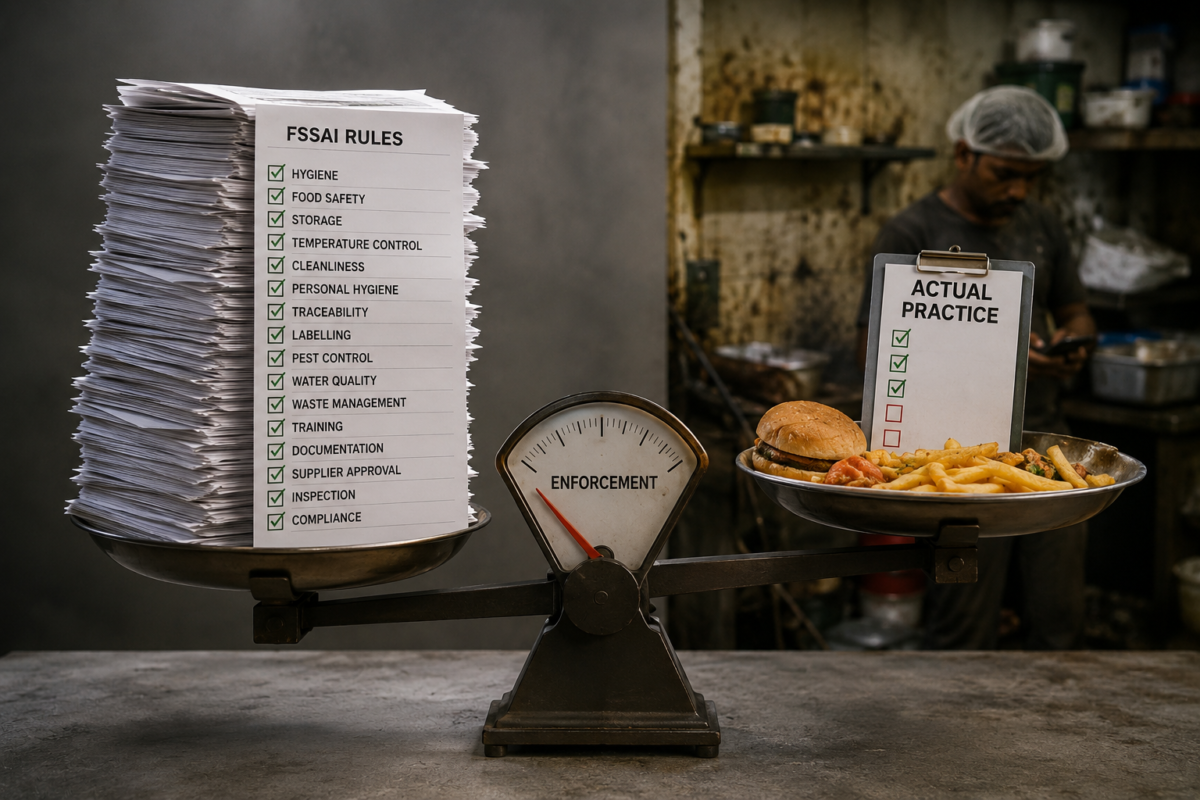
India has a comprehensive food safety framework led by the Food Safety and Standards Authority of India (FSSAI). Food businesses are expected to meet requirements covering hygiene, storage, food handling, labelling, testing and other food-safety controls.
And enforcement is happening at scale.
Government data shows that between 2022–23 and 2024–25, more than 5.18 lakh food samples were analysed. During the same period, 88,192 cases resulted in penalties, 3,614 resulted in convictions, and 1,161 licences were cancelled.
So, India does not lack food safety regulations.
The bigger question is how consistently those rules are implemented.
A business may have an FSSAI licence.
It may have a HACCP plan.
It may maintain temperature logs and cleaning checklists.
But are these systems actually being followed every day?
Food safety is not just documentation. It is a culture of continuous control.
When Expiry Dates Become a Safety Concern
Food safety isn’t only about what happens inside a kitchen.
Food fraud and expiry-date manipulation can also put consumers at risk.
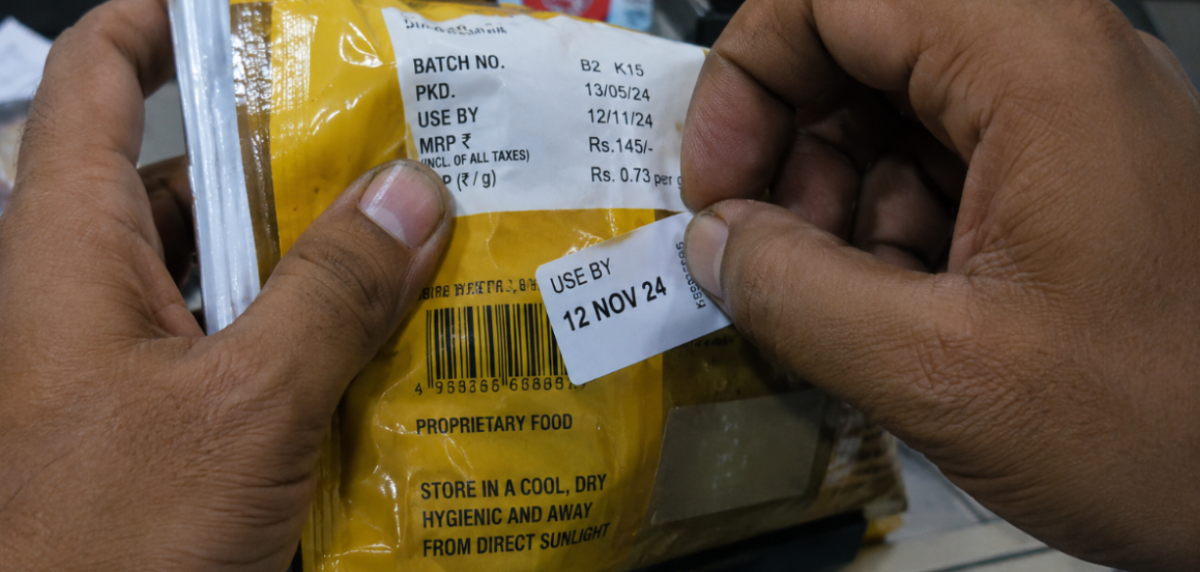
In Navi Mumbai, Maharashtra FDA and police recently seized food products worth approximately ₹75.52 lakh during inspections of a packaging facility. Officials alleged that manufacturing and expiry/use-by dates on packaged products were being replaced, while original ingredient and nutritional labels were also allegedly being removed and replaced with fresh stickers.
For consumers, an expiry date is more than a number printed on a packet.