
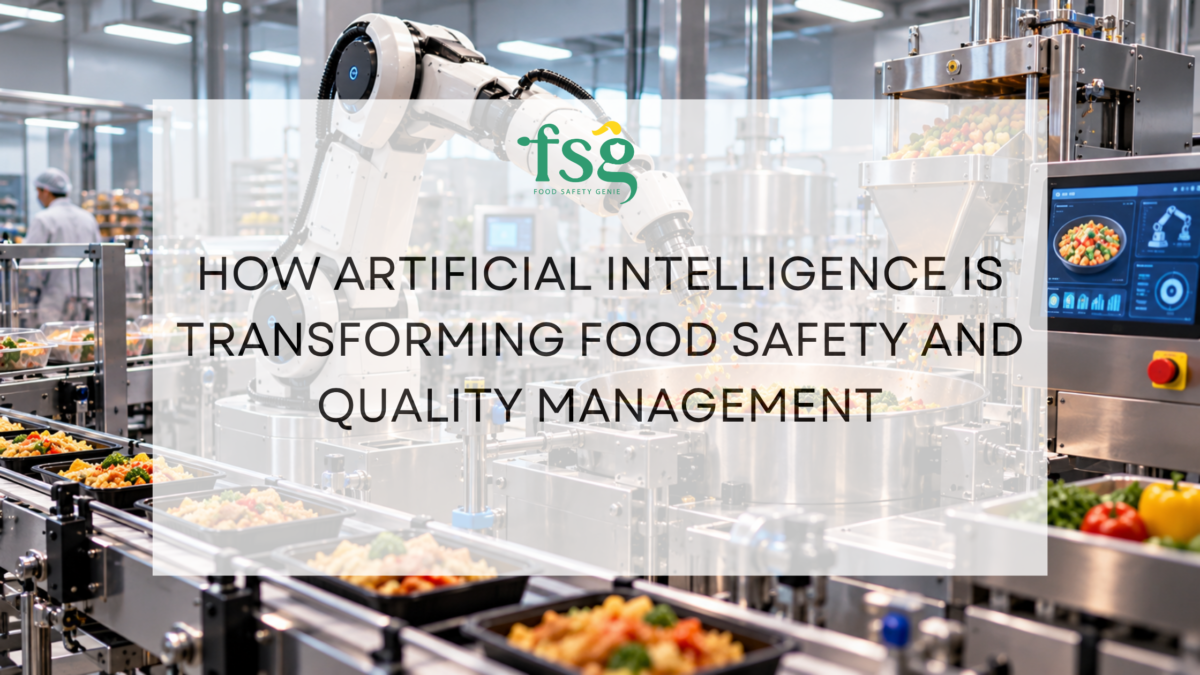
From detecting contamination to predicting risks, AI is changing how the food industry keeps food safe.
Imagine a food factory where cameras can identify a quality defect in seconds, sensors continuously monitor production conditions, and algorithms can analyse thousands of pieces of food-safety data to identify potential risks.
This is no longer just a futuristic idea.
Artificial Intelligence (AI) is becoming a powerful tool in food safety and quality management, helping the industry move from simply reacting to problems towards identifying and managing risks earlier. Recent research shows applications ranging from hazard detection and food fraud monitoring to traceability, risk forecasting and regulatory decision-making.
From Manual Checks to Smart Monitoring
Traditional food-safety systems rely heavily on inspections, laboratory testing, records and human observation. These remain essential, but AI can help process large amounts of information much faster.
For example, computer vision and machine learning can analyse images to identify defects, contamination indicators or changes in food quality. AI-based systems can also combine information from sensors and production data to monitor processes in real time.
This means quality teams can potentially identify unusual patterns before they become bigger problems.
Predicting Risks Before They Happen
One of AI’s most interesting applications is predictive food safety.
Instead of waiting for a contamination problem to occur, AI can analyse historical and real-time data to identify patterns associated with potential hazards. Research has explored AI applications in microbial detection, contamination prediction, foodborne disease surveillance and risk forecasting.
In simple terms:
Traditional approach: Detect → Investigate → Correct
AI-supported approach: Analyse → Predict → Prevent
Making the Supply Chain More Transparent
Food can travel through multiple suppliers, manufacturers, warehouses and retailers before reaching consumers. AI combined with digital traceability systems can help analyse information across this complex supply chain.
It can support tracking, identify unusual patterns and help businesses respond more quickly when a food-safety issue is detected.
Can AI Replace Food-Safety Professionals?
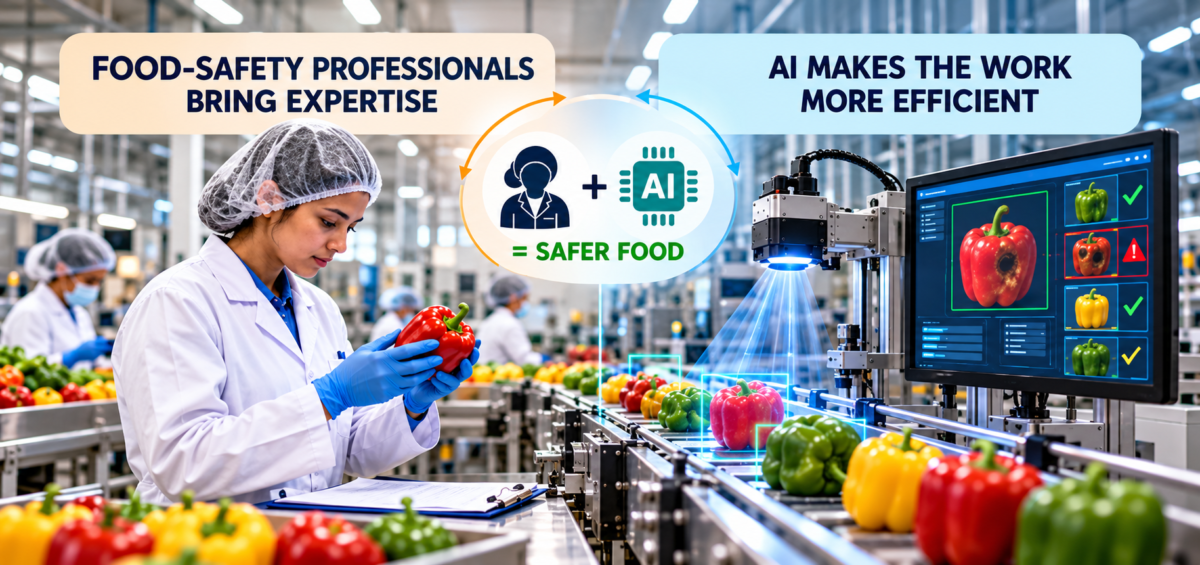
Not quite.
AI can analyse data and identify patterns, but food-safety decisions still require scientific expertise, validation and human oversight. The FAO-supported 2026 review highlights challenges including data quality, transparency, responsible data governance and explainability.
An AI system is only as reliable as the data and controls behind it.
The Future: Smarter Food Safety
AI is changing food safety from a system that primarily reacts to problems into one that can increasingly monitor, predict and support prevention.
But technology alone cannot guarantee safe food.
The future of food safety will depend on combining AI + reliable data + scientific expertise + strong food-safety systems.
Because the smartest food-safety system isn’t the one with the most technology.
It’s the one that uses technology to keep food safer.