
Think about how food is handled every day in India: hot biryani packed into takeaway boxes, chutney stored in plastic tubs, tea poured into disposable cups, and leftover curry transferred into containers for the next day. These actions seem ordinary, but one important question often goes unnoticed: Is the material touching the food actually safe for it?
A container may look clean, sturdy and convenient. That does not automatically make it suitable for food contact.
What Does “Food-Grade” Really Mean?
A food-grade material is designed and suitable for contact with food under its intended conditions of use. It should not transfer substances into food at levels that could make it unsafe or unacceptably affect its quality.
In India, the Food Safety and Standards Authority of India (FSSAI) regulates food packaging through the Food Safety and Standards (Packaging) Regulations, 2018, along with subsequent amendments. These requirements cover materials that come into direct contact with food, including packaging used for storage, preparation, transportation and service. Packaging must be suitable for the food and the conditions in which it is used. FSSAI Packaging Regulations.
Why Can the Wrong Container Be a Problem?
Food-contact materials can behave differently depending on temperature, acidity, fat content and contact time. For example, a container intended for room-temperature storage may not be suitable for filling with piping-hot sambar or reheating food in a microwave.
Using unsuitable materials can increase the risk of unwanted substances migrating into food. This is why a container’s intended use matters just as much as its appearance.
Consider a restaurant packing hot, oily gravy into a low-quality plastic container that was never intended for hot food. The container may not visibly melt or change shape, but appearance alone cannot confirm that it is safe.
Common Materials: What Should You Know?
- Food-grade plastics: Convenient and lightweight, but not every plastic container is suitable for hot food, microwave use or repeated use. Follow the manufacturer’s instructions and use only products intended for the specific purpose.
- Stainless steel: Commonly used for Indian cooking and storage. Choose suitable food-contact utensils and keep them clean, intact and free from corrosion.
- Glass: Often useful for storage, but check whether the product is designed for the intended temperature changes. Ordinary glass may crack with thermal shock.
- Paper and cardboard: These are not automatically safe simply because they are paper-based. Coatings, adhesives, inks and the type of food they contact also matter.
Everyday Practices That Can Make a Difference
For homes and food businesses, a few simple habits help reduce risk:
- Do not assume that a plastic container is microwave-safe unless it is specifically labelled for that use.
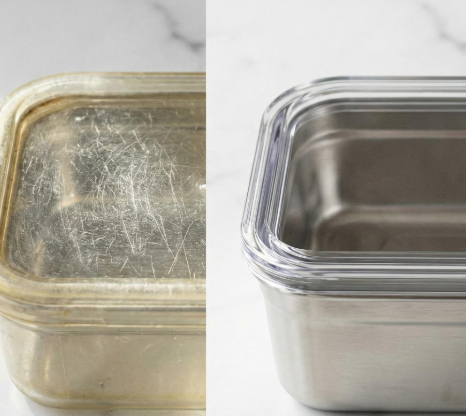
- Avoid using damaged, cracked or heavily worn food containers.
- Do not reuse single-use packaging unless it is explicitly designed and approved for reuse.
- Never wrap food directly in newspaper or use packaging of uncertain suitability.
- For businesses, obtain food-contact packaging from reliable suppliers and retain relevant specifications or compliance documents.
FSSAI’s packaging requirements also address migration from plastic materials and prohibit the use of recycled plastics for food packaging, subject to the applicable regulatory provisions and subsequent amendments. Businesses should check the current requirements rather than relying on old packaging practices.
Food Safety Begins Before the First Bite
Food safety is not only about fresh ingredients, clean hands and correct cooking temperatures. It also depends on the materials that touch the food throughout preparation, storage and delivery.
For restaurants, caterers, manufacturers and consumers, choosing the right container is a small decision with an important purpose: protecting food from avoidable contamination.
The takeaway is simple: don’t judge a food container by how it looks or how convenient it is. Check whether it is suitable for the food, temperature and intended use. Because safe food deserves safe packaging.